

Introducing NanoFlowX into production requires a connection between the selected material and a repeatable process. A successful engineering sample is valuable, but production adds different operators, batches, handling and assembly variation. The goal of qualification is to identify the conditions that produced an acceptable result and establish how the line will maintain those conditions.
This guide focuses on transferring a NanoFlowX candidate into controlled manufacturing. GOLDTEC can help discuss grade selection using the application requirements and current product information. The sections below explain how to organize the trial, production instructions, inspection and change review so the decision supports real electronic assemblies rather than a simplified demonstration alone.
Freeze the assembly and requirement used for the trial
Identify the exact assembly configuration and its intended service. Record the board revision, relevant components, connectors, enclosure interfaces and operating requirements. Include the environmental exposure and required acceptance tests. If the trial uses a development board that differs from the production design, list the differences and decide whether they affect the evidence.
Define keep-out areas and functional interfaces clearly. Operators need to know where coating is intended and which surfaces must remain available for contact, adjustment or other functions. A written or visual instruction should be specific enough for another operator to follow. Ambiguous statements such as coat the board can hide critical differences in how individual samples are prepared and treated.
Identify the NanoFlowX grade and documents
Use the exact proposed grade and current technical and safety information. Different options within the product range may have different purposes or process requirements. Do not transfer a claim from one grade to another without supporting information. Keep the reviewed document revision with the trial record, so the approval refers to a defined material and technical basis.
Discuss the application with GOLDTEC through the NanoFlowX product page or enquiry form. Provide exposure, electrical requirements and production constraints before requesting a material recommendation. If an existing specification requires a particular coating category or process, identify that requirement. A thin protective coating should not be assumed to satisfy an unrelated specification solely because it addresses moisture protection.
Control preparation and handling before coating
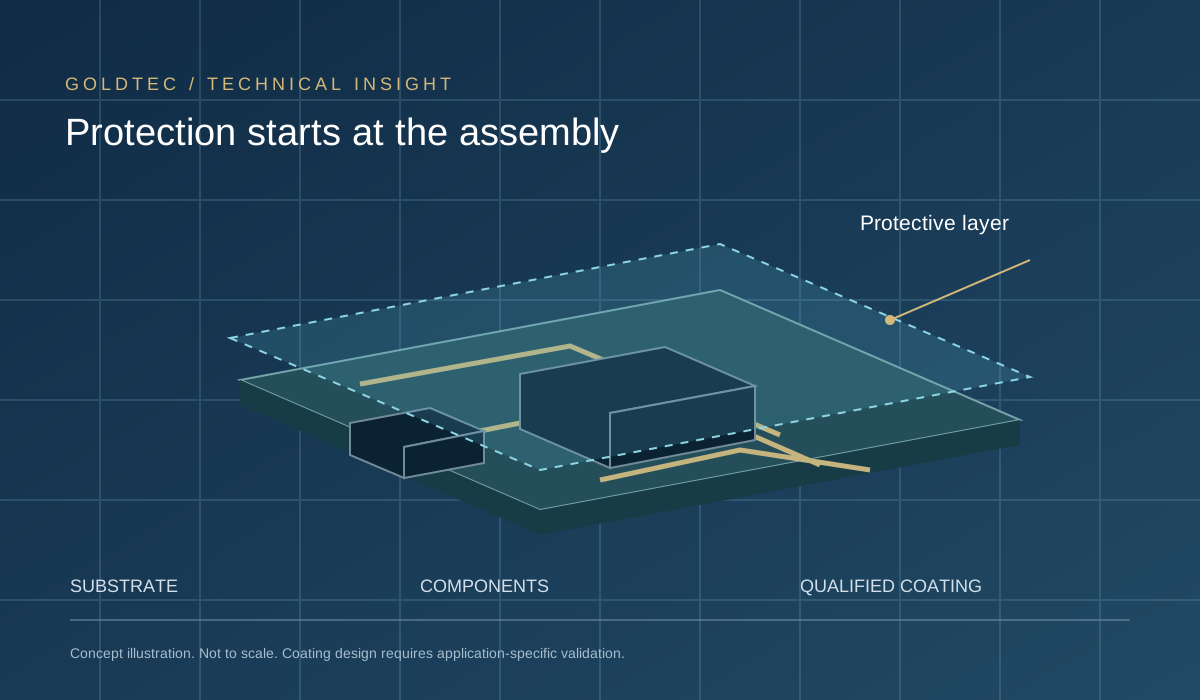
Preparation is part of the qualified process. Record cleaning, drying, handling and storage steps according to the chosen material and assembly requirements. Manufacturing residues, particles or moisture can affect the protected system. Establish how acceptable surface condition will be verified and who is responsible when the assembly arrives from another contractor or manufacturing site.
The interval between preparation and application also needs attention. Boards may collect contamination through handling or storage after cleaning. Define packaging and handling controls appropriate to the process. If trial samples receive special care that routine production will not receive, the trial may not represent the line. Align the proposed work instruction with the conditions that production can maintain consistently.
Design a representative application trial
Select samples that represent the relevant assembly variation and difficult geometry. Dense components, connectors, labels and sensitive interfaces should be included where they affect the process. Record material identity, application method and relevant conditions for each group of samples. If more than one candidate is compared, change variables deliberately and keep the comparison traceable.
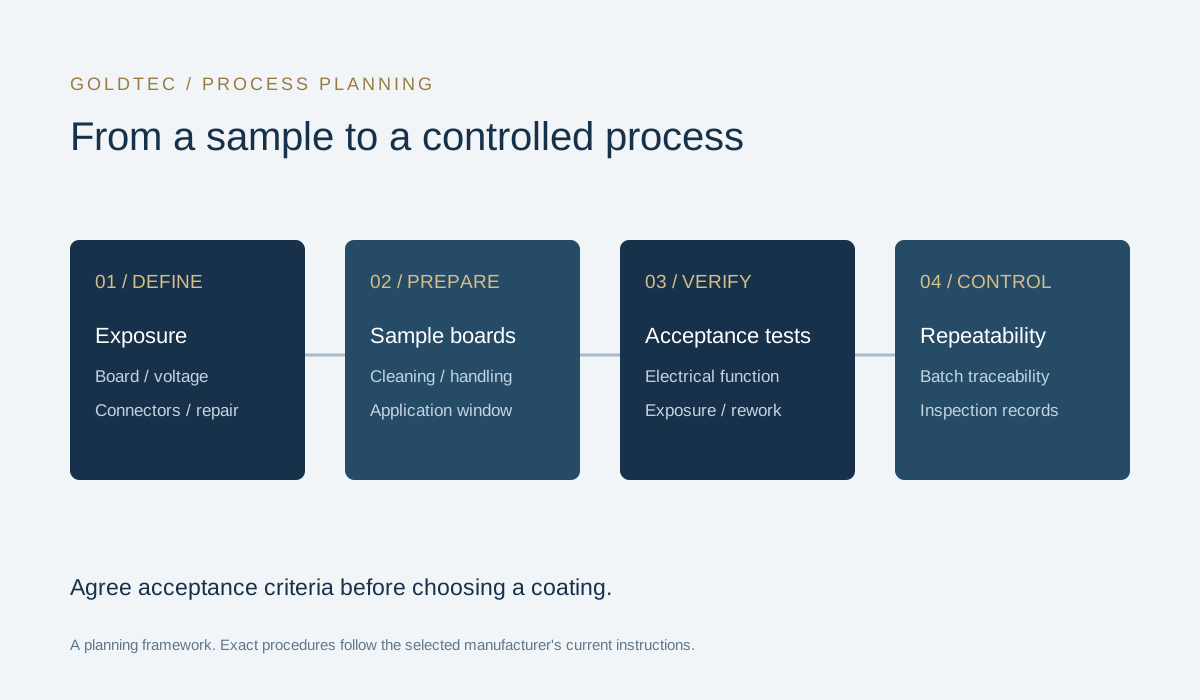
Agree the acceptance plan before testing. Include appropriate functional checks before and after coating and the environmental verification required by the application. Inspect intended coverage and unintended deposition in keep-out areas using suitable methods. A visible water-repellent effect does not by itself establish electrical function, complete device protection or repeatable manufacturing capability.
Convert the approved result into work instructions
The production instruction should reproduce the approved process rather than summarize it loosely. Identify the assembly revision, material, preparation, application, handling and inspection. Include relevant photographs or diagrams of acceptable coverage and keep-out areas. Make product-specific instructions accessible to operators and define how obsolete revisions are removed from use.
Describe how a unit moves between stages and what evidence is recorded. The appropriate level of traceability depends on the product and customer requirements, but the record should allow a later issue to be investigated. Where a specialist operator performed the development work, verify that another trained operator can follow the instruction without relying on undocumented personal technique.
Establish inspection and nonconformance handling
Decide what is checked on each assembly and what is verified through sampling or additional testing. Inspection should address the critical process requirements and remain practical for the production volume. Specify what happens when coverage, keep-out condition or function does not meet the agreed criteria. A process is incomplete if it produces an uncertain unit with no defined route to review.
Repair and rework should be considered before release. Assemblies may need component replacement or later service access. Confirm an appropriate procedure using the product information and assembly requirements. Record repaired units and relevant checks so they are not treated as if no intervention occurred. A repair that restores function should also be assessed for the protection requirement it may have disturbed.
Control changes that affect the qualified process
Changes to components, connectors, cleaning, coating grade or application equipment can affect the outcome. Establish a review process with an engineering owner. Not every change requires repeating every test, but the decision about verification should be made and recorded by the responsible team. A purchasing substitution should not silently alter a qualified material or an important assembly interface.
Use production feedback to identify recurring variation. Compare issues with material identity, handling, assembly revisions and process records. Avoid attributing every field failure to the coating without investigation, or treating an isolated successful sample as evidence that all subsequent changes are harmless. The value of process control is that it gives the team information with which to investigate and improve.
Prepare the production handover and supplier enquiry
The handover should include the approved material, trial report, work instruction, acceptance criteria and change-review responsibilities. Identify unresolved items and the conditions under which the process was approved. This helps engineering, quality, procurement and production use the same definition of an acceptable coated assembly when the project moves beyond development.
Contact GOLDTEC with the assembly description, operating exposure, electrical requirements, production volume and proposed application method. State whether you are selecting a new grade, investigating a failure or transferring a process to production. Use the form to discuss NanoFlowX and the next technical step. A focused brief supports a relevant material review and a quotation aligned with the process your team intends to qualify.
Frequently asked questions
Does a successful coated sample qualify a production line?
It supports the decision but does not establish control of every production variable. Document the material, preparation, application, assembly configuration and acceptance checks used in the trial, then translate them into repeatable work instructions and change controls.
Can I use the same claims for every NanoFlowX grade?
No. Select the exact grade and review its current technical information. Requirements and claims can differ across products. Qualification must connect that grade with your actual assembly and intended service conditions.
What should the production instruction include?
Include approved assembly configuration, material identity, preparation, keep-out areas, application procedure, handling, inspection, functional checks and treatment of nonconforming units. Add the current product instructions and the relevant approved trial record.
When should qualification be reviewed?
Review changes that could affect protection or function, such as component materials, connectors, cleaning, coating grade, equipment or application method. The responsible engineering team should decide and document the extent of verification required for each change.
How can GOLDTEC help at the start?
GOLDTEC can discuss the application brief and available NanoFlowX product information to help identify a candidate grade. Provide exposure, electrical requirements, assembly details and production constraints so the next trial and quotation can be focused.
Sources and technical references
Manufacturer data applies to a specific grade and system. Define the project specification against the substrate, exposure and current manufacturer instructions.
